Retreats in Thailand
How a Thai temple retreat actually works
Thailand keeps an old institution alive: temples that teach meditation to lay guests and hand them a broom afterward. Here is the common machinery, described plainly.
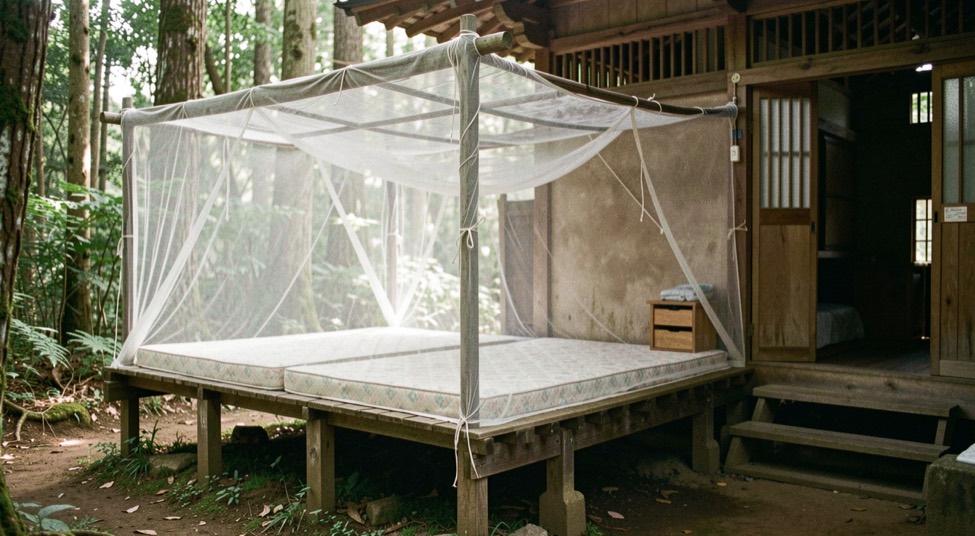
Several of Thailand’s best known meditation temples operate a quiet parallel institution: public retreats where lay guests, Thai and foreign, men and women, stay for days or weeks, receive instruction from a teacher, and practice inside the ordinary discipline of a monastery. The best known names among English speaking visitors are Wat Mahathat in Bangkok, Wat Ram Poeng in Chiang Mai and Wat Suan Mokkh in Chaiya, and each publishes or preserves its own arrangements. The machinery underneath them, however, is shared, and knowing it in advance turns a nerve racking arrival into a small administrative event.
Arrival, registration and the interview
Temple retreats are not booked like hotels. Some centers ask guests to arrive in person on a given day, others to write ahead; arrangements change often enough that yesterday’s forum post is not evidence. What is constant is the intake conversation. A teacher or senior lay coordinator asks about experience, health and what you are looking for, assigns lodging, and explains the technique you will practice. At the Bangkok and Chiang Mai centers in the Mahasi lineage this is where the noting method is taught; at Suan Mokkh the orientation happens within the fixed ten day program that starts on the first of the month. The interview is not a test to pass. Its honest purpose is matching: the teacher wants to know what is true of you before handing you a method.
The precepts and the outer discipline
Lay guests ordinarily take the eight precepts for the duration: no killing, stealing, sexual activity, false speech, intoxicants, eating after noon, entertainment and adornment, and high or luxurious beds. The list reads austere and functions mostly as scaffolding. The dress code is modest clothes, loose and light; some centers ask guests to wear white. Phones, books and journals are usually surrendered or left unused, because the retreat’s economics are simple: fewer inputs, fewer outputs. Nobody is checking your virtue. The forms exist so that the mind has fewer doors to keep bolting through.
| Hours | What happens | Notes for lay guests |
|---|---|---|
| 4:00 to 4:30 | wake by bell, first sitting of the day | the pre dawn sit is the retreat’s spine; jet lag makes it easier than it sounds |
| morning | alternating sitting and walking, chanting, then the single meal before noon | guests eat with the community; food is Thai, and plain by design |
| afternoon | more alternating practice, a work period, then instruction or an interview with a teacher | the broom is part of the curriculum, not a chore to escape |
| evening | group sitting, a talk, chanting, lights out early | most centers end the day by 21:00; the schedule enforces its own rest |
Interviews, and the point of them
In the insight traditions taught to lay guests, the retreat runs on short reporting interviews: every day or two you describe your practice, what arises, and what you did about it, and the teacher adjusts the instruction. The interview is where a retreat becomes personal. Describing the mind in a second language to a monk through an interpreter is humbling for exactly as long as it takes to notice that the questions are always the same three: what did you do, what happened, what did you do then. Bring your honest, small words; grand reports attract grand corrections.
Dana, and the retreat economy
Temple retreats run on dana, generosity, rather than on published fees, though some programs collect a modest registration contribution that covers plain food and lodging, and Suan Mokkh’s international program has historically worked this way. The notebook deliberately prints no figures: they move, they vary by program, and asking the office directly is both more accurate and more polite. What a guest should budget honestly is the offering at the end, the travel, and the humility to be fed by strangers. The retreat is not free; it is prepaid by the tradition, and dana is how the account stays balanced.
A checklist for the fortnight before
Prepare lightly, confirm twice
- Confirm current arrangements directly with the center, in writing where possible, and note the exact arrival day and hour.
- Book travel with a buffer day; arriving exhausted at 22:00 is how good retreats go wrong.
- Pack loose light clothes, a shawl, flip flops, a torch, earplugs, toiletries without perfume, and any personal medication.
- Leave the laptop plan at home: most centers will store or forbid it anyway.
- Settle work and family affairs so the mind can afford to be silent; a retreat is a bad place to dodge an email.
Common mistakes
The first mistake is treating the retreat as wellness tourism with robes, arriving for the photographs of temple roofs and resenting the fourth pre dawn sit; the roof photographs and the fourth sit are one package. The second is method shopping mid retreat, blending the noting you were taught with the breathing you read about last month; the teachers’ instruction is to do the given technique thoroughly, and the honest experiment happens between retreats, not inside one. The third is arriving on faith in an old forum thread, then discovering the program moved; confirm with the source. The fourth is skipping the work period, which quietly marks a guest as a guest rather than a practitioner. The fifth is packing for a holiday; the packing list above fits in a daypack.
If you take one thing from this guide
Take the sequence: confirm, arrive early, accept the forms, do the technique, keep the interviews honest, and leave an offering that stings slightly. That is the whole mechanics of the institution, and it has carried lay guests for generations. When choosing among temples is the next question, the comparison in choosing between three public temples lays the three best known centers side by side; and if the mind asks what the daily scatters and gathers, the table of the five hindrances and their antidotes travels well in a daypack.