Section 01 · Meditation Practice
Meditation Practice
How anapanasati and satipatthana work for lay people: the sixteen steps of MN 118, the four foundations of MN 10, and a daily sitting that survives real life.
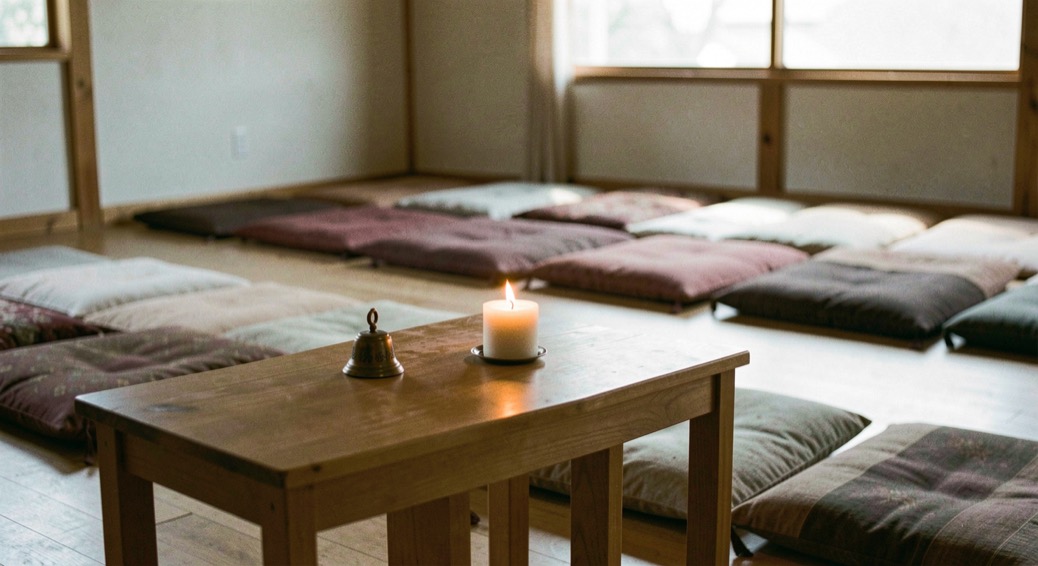
Everything in this notebook rests on two discourses: the Anapanasati Sutta (MN 118) and the Satipatthana Sutta (MN 10). They are short enough to read in one sitting and deep enough that no one exhausts them, which is why the guides here keep returning to their actual words instead of layering technique on technique. The breath notes are walked through step by step, the sixteen stages taken at the pace the canon gives them, and the four foundations are mapped onto an ordinary lay week rather than a monastic one.
The practical guide to a thirty minute daily sitting turns both suttas into a timetable, while the map of the four foundations of mindfulness shows how body, feeling, mind and dhammas trade places as one sitting unfolds. None of it asks for a robe, a shrine or an hour you do not have.
In this section
-
Anapanasati: the sixteen steps of MN 118
The Anapanasati Sutta is the clearest instruction manual in the canon. Here are its sixteen steps, kept in their own order, with an honest note on which four carry most lay practice.
-

A thirty minute daily sitting that survives real life
Duration is negotiable, regularity is not. Here is a half hour sitting that fits before work, with a roadmap you can shorten to ten honest minutes on bad mornings.
-
The four foundations of mindfulness: a lay map
MN 10 is longer than its reputation. This map keeps its four territories, body, feeling, mind and dhammas, in the order the sutta gives, and marks the entry points that suit an ordinary week.
Two neighbouring doors extend the practice: Suttas Made Accessible and Retreats in Thailand.