Daily Life Practice
Keeping a Dhamma notebook for your practice
This site is named after the habit it recommends: a dated notebook where practice becomes visible enough to be corrected. Here is the smallest workable version.
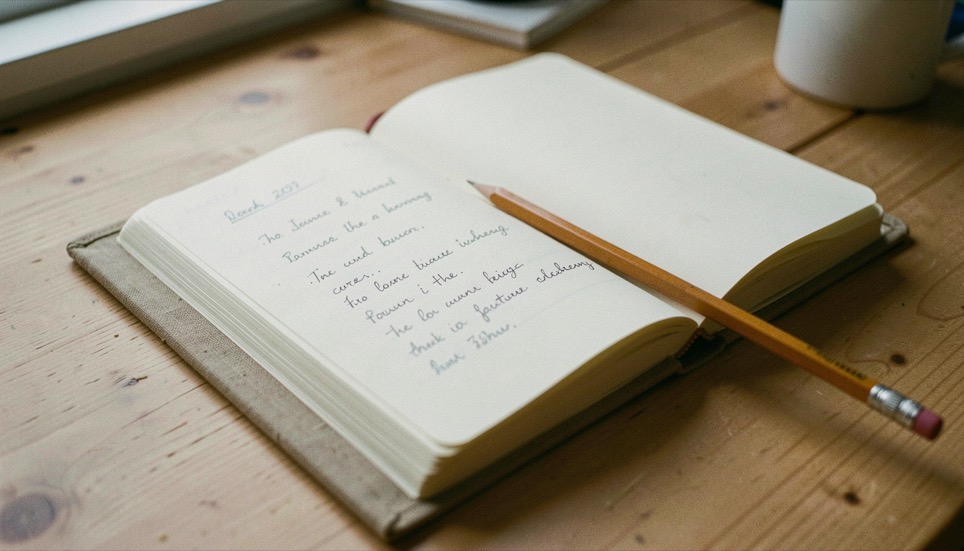
This site is called a notebook on purpose. The habit underneath the name is simple enough to sound trivial: a dated record, a few lines a day, of what practice actually did. It matters because the mind that sits is also the mind that grades the sitting, remembers the canon selectively and reports to nobody. A notebook changes the reporting line. Within weeks it supplies the one thing sitting alone never can, which is evidence about patterns: which hour holds, which hindrance keeps office hours, which sutta was actually read versus remembered. The guides on this site assume it throughout, and this page teaches the smallest workable version.
The daily line
The daily line is one entry, one minute, three parts: the sitting, the weather, the reading. The sitting is minutes and shape, written plainly: thirty, first tetrad, or ten, the floor held. The weather is one word for the dominant hindrance, following the naming habit taught in the five hindrances and their antidotes: wanting, leaning, fog, fan, doubt. The reading is the reference of anything read that day, SN 56.11, MN 61, or none. Three parts, twenty words, done at the same hour as the evening reflection. The daily line must be small enough to survive bad days, because a notebook that only records good weeks is a highlight reel, and highlight reels teach nothing.
The weekly page
Once a week, one page. Copy the week’s lines into a short column, then answer three questions underneath. What repeated: the same hindrance three mornings is a finding, and findings get worked, as the hindrance guides show. What drifted: sittings that shrank, anchors dropped, the phone winning its slot. What to change: exactly one adjustment for the coming week, written as a sentence with a day attached. The weekly page takes ten minutes and is where the notebook stops being a diary and becomes a practice instrument. Ten minutes on the same weekday, anchored after the reflection, keeps it alive; anchored to intention, it dies in a fortnight.
| Rhythm | Cost | Contents | What it prevents |
|---|---|---|---|
| daily line | one minute | sitting, one word weather, references read | memory drift and the highlight reel |
| weekly page | ten minutes | the column, what repeated, what drifted, one change | patterns hiding in plain sight |
| monthly review | half an hour | the quarter’s direction, a teaching tested, next month’s foundation | drift without a rudder |
What goes in, and what stays out
In: facts, references, one word weather, counts of caught anchors from off the cushion practice, and the resolutions that the review produces. Out: experiences written for their glow. Visions, exquisite calms and borrowed insights make poor entries; they invite the notebook to become a collection of peak moments and, worse, an audience to perform for. The canon’s own reporting genre is the interview, plain facts for a teacher, and the notebook is the same genre addressed to oneself. If an experience genuinely changes the practice, the notebook records its practical consequence, which is the only part that survives a week.
A checklist for the first month
Start smaller than feels serious
- Buy a cheap paper notebook; the good leather one is for next year’s you, who has earned it.
- Write the first page tonight: the month’s foundation or hindrance, and the sitting slot.
- Rule three columns for the daily line: sitting, weather, reading.
- Pick the weekly page’s day and hour now, anchored to an existing act.
- Miss a day without comment; the notebook resumes, it does not restart.
Common mistakes
The first mistake is volume: writing essays, then quitting under the weight of one’s own standard. The daily line is twenty words, and the essays can live in a different book if they insist. The second is the highlight reel, recording only luminous sittings, which converts evidence into advertising and quietly teaches dishonesty. The third is the scorekeeping drift, where weather words turn into grades; fog is a report, and the notebook that hears it as a verdict will soon be lied to. The fourth is going digital by default; an app’s streaks and badges import a reward system the practice never asked for, though plain typed text is harmless for those who type faster than they write. The fifth is reading the notebook for consolation instead of patterns, seeking the weeks that flatter. The monthly review exists precisely to prevent this, and it works.
If you take one thing from this page
Take the three rhythms and start tonight with the daily line alone. Twenty words beside the bed, one minute after the review, and nothing else for a month. Decide now which notebook and which hour, because the decision is the only part that will not happen by itself. A practice with a written record gains the one thing solitary practice always lacks, a witness that remembers, and the reading paths on this site, from five suttas to start with onward, give it honest material to record.